Generics
Kotlin
2026-08-21 09:00
Where we are
Used everywhere, explained nowhere
List<String> · (Int) -> Int · Map<String, Person>
This unit explains them.
Three topics, very different difficulty
Declaring — mostly syntax you know from Java.
Erasure — a JVM constraint, with a clever workaround.
Variance — a genuine question, and the hard part.
The question variance asks
If String is a subtype of Any,
is List<String> a subtype of List<Any>?
The answer is sometimes.
What you will be able to do
- Declare generic functions, classes and extensions.
- Constrain a type parameter.
- Explain type erasure.
- Use reified type parameters.
- Explain variance and why the obvious answer is unsafe.
- Declare covariance and contravariance.
- Distinguish declaration-site from use-site variance.
- Use star projections.
Declaring generics
A type parameter

Usually inferred
Generic classes
Upper bounds
Without the bound, > would not compile.
Several bounds
The nullability default
An unbounded T has upper bound Any?. So T is nullable.
Ask for the guarantee
Unit 6’s discipline, applied to type parameters.
The permissive case is the default. Always.
Erasure
What the JVM sees
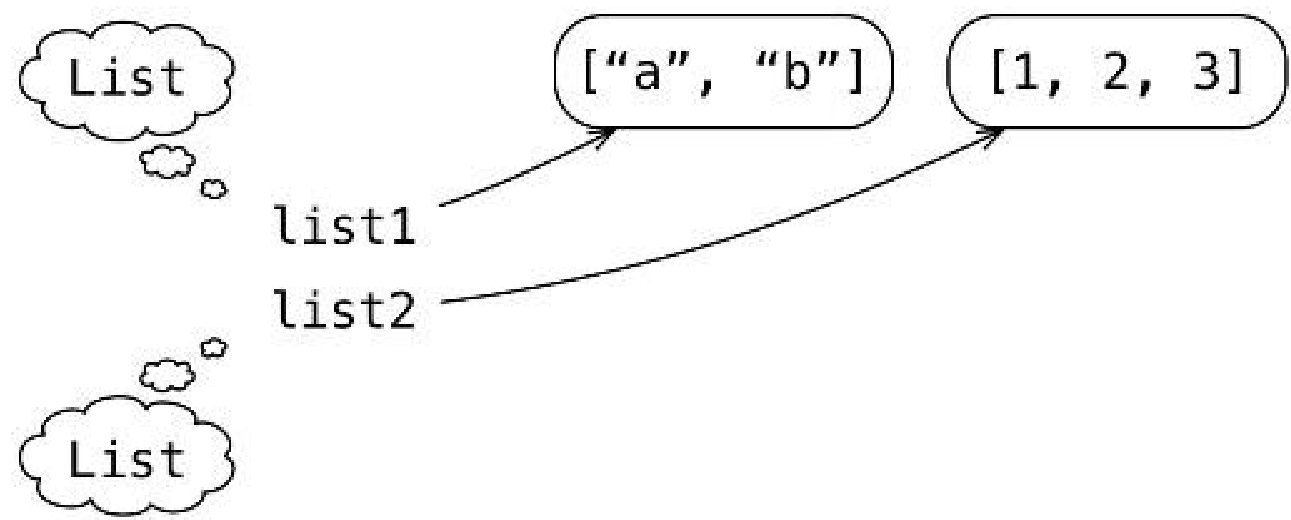
Discarded at compile time
Generics were added to Java after the fact.
For compatibility, the type arguments are thrown away.
Kotlin inherits this, because it targets the JVM.
What becomes impossible
- the check cannot be performed
- you cannot create an instance of a type parameter
- overloads differing only in type argument clash
Star projections
Elements read out are Any?. You cannot write.
Not the same as List<Any?>
List<Any?> — the element type is Any?.
List<*> — the element type is something specific we do not know.
Confusing them produces surprising errors, usually a refused write.
When erasure is fine
Almost always.
The compiler already checked; there is nothing left to verify.
It bites in exactly two places: runtime type checks and reflection.
Reified type parameters
The trick
Nothing was un-erased
Inlining substitutes the body at the call site.
And the type argument is known at each call site.
isA<String>(x) becomes, literally, x is String.
Which is why the restriction exists
Only inline functions can have reified parameters.
A non-inlined function has one body shared by all callers.
No single type to substitute.
Second thing inlining paid for
Unit 8: non-local returns.
Unit 9: reified type parameters.
What it enables
The reflection unit is full of the second shape.
A caution
Reification requires inlining.
Keep reified functions small.
Extract the bulk into a non-inline helper.
Variance: the problem
Subtyping
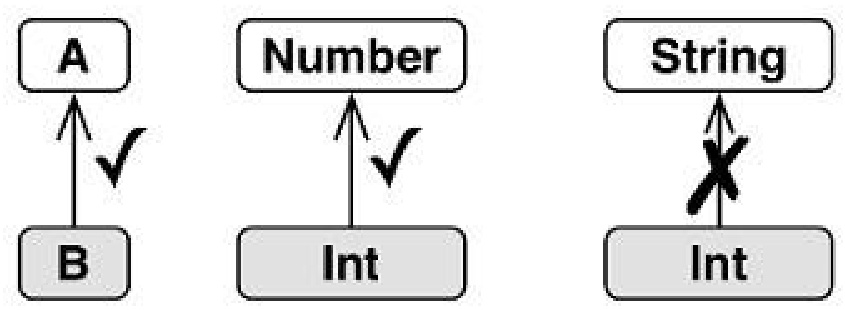
The question
A String may be used where an Any is expected.
May a List<String> be used where a List<Any> is expected?
Why “obviously yes” is wrong
So it depends on what the type does
Only produces → safe. Everything out is a String, and a String is an Any.
Also consumes → not safe.
Unit 6 was setting this up
List only produces → can be covariant.
MutableList consumes → cannot.
That earlier split exists to make this one possible.
The terms
Covariant — subtyping preserved.
Contravariant — subtyping reversed.
Invariant — neither. Java’s default, which is why wildcards exist.
Also worth seeing
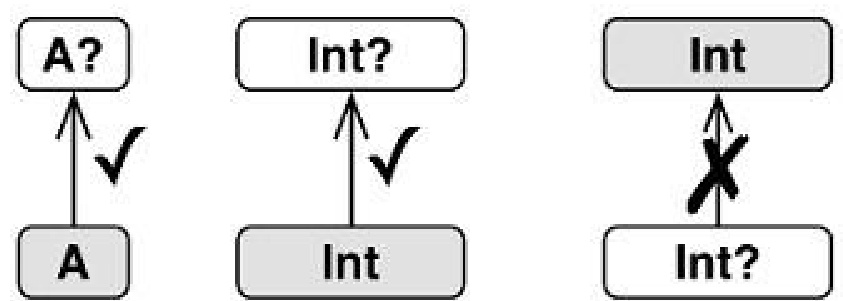
out and in
Both at once
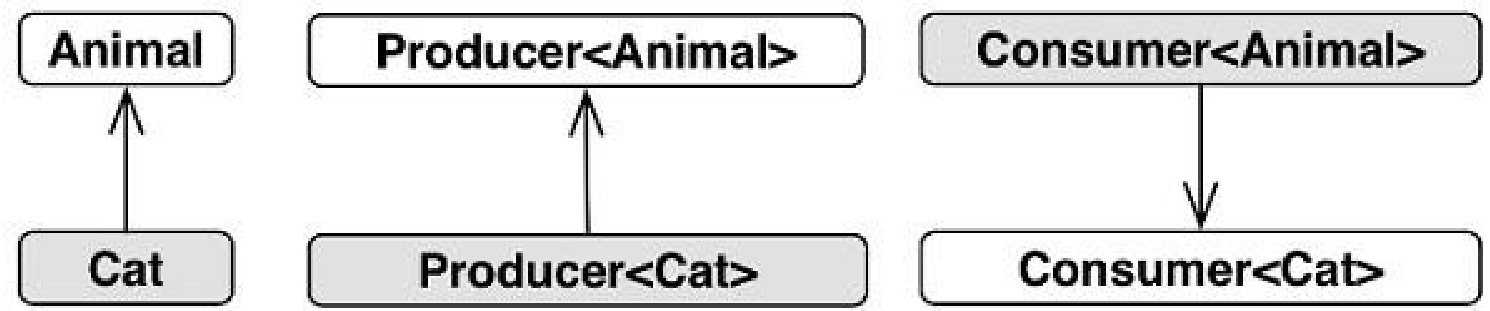
out — covariance
Only produces. Subtyping preserved.
Position rule: may appear only in return types.
in — contravariance
Only consumes. Subtyping reversed.
A Comparator<Any> can compare two strings.
The mnemonic
outfor producers,infor consumers.
And the position rules follow from it:
a producer’s type is where values come out; a consumer’s, where they go in.
Function types show both
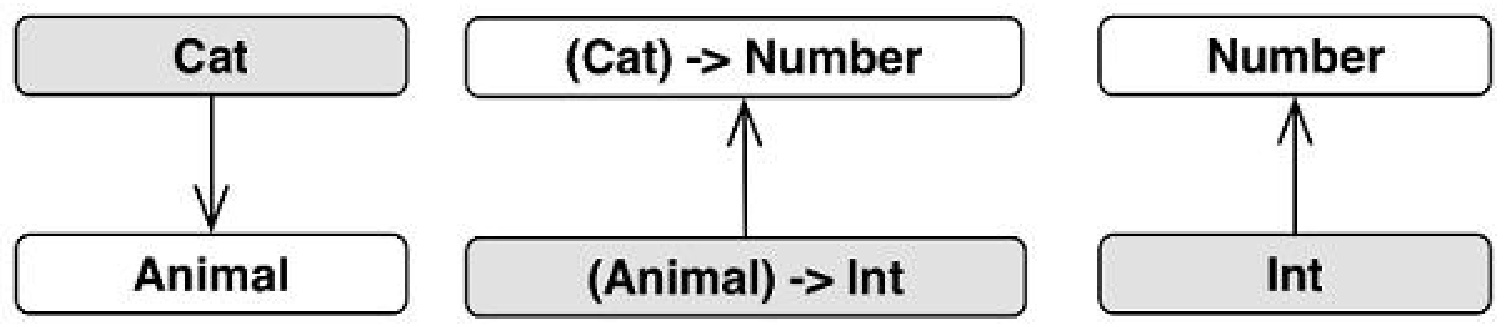
Which makes sense
A function accepting more kinds of input
and returning a more specific result
can stand in for one that accepts fewer and returns something vaguer.
Declaration-site variance
Java: at every use. Kotlin: once, on the class.
Type projections
source.add(...) will not compile. The projection is enforced.
The practical guidance
Most of the time you use variance without declaring any.
List is already out T. Comparator is already in T.
And when you write your own
Does this type produce its parameter, consume it, or both?
Produce → out. Consume → in.
Both → invariant, and project at the use sites that need one direction.
Summary
The six things to carry away
- An unbounded
Tis nullable — its upper bound isAny?. - Erasure bites in exactly two places: runtime type checks and reflection.
List<*>andList<Any?>are different claims.reifiedworks because the type argument is known at each call site.- Variance is a real question, and the mutable-list argument is the answer.
outfor producers,infor consumers — declared once, unlike Java’s wildcards.
Where next
Annotations and Reflection — inspecting and acting on code at runtime.
Erasure returns immediately, since reflection is where it is most missed.
And reified parameters return as what makes reflection APIs pleasant to call.
Kotlin · Generics