Programming with Lambdas
Kotlin
2026-08-21 09:00
Where we are
The functional half begins
The previous three units were about declaring and calling.
This one starts the functional side of the language.
And it is the destination
The final section — lambdas with receivers —
is the mechanism behind the HTML builder from unit 1.
Read with and apply as the foundation, not the footnote.
What you will be able to do
- Write lambdas and shorten them idiomatically.
- Explain variable capture.
- Use member references.
- Transform collections.
- Use sequences for lazy evaluation.
- Create sequences three ways.
- Pass lambdas to Java functional interfaces.
- Use SAM constructors.
- Use
withandapply.
Lambda syntax
Before
After
The full form
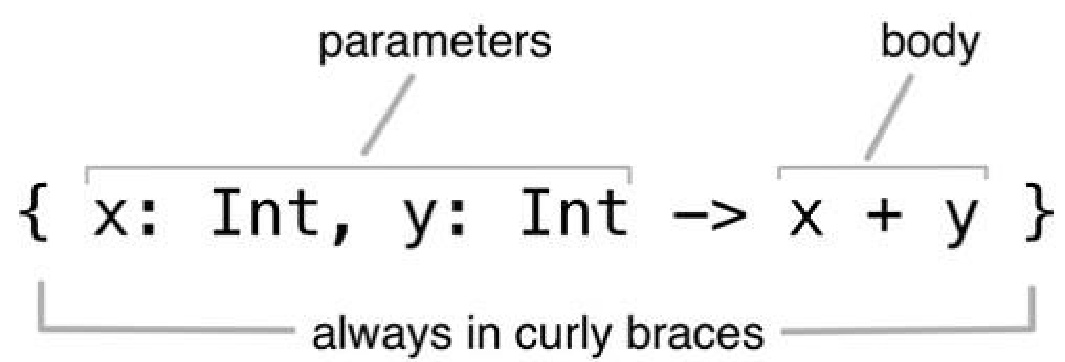
Always in braces
Storing one is legal and rarely the point. Lambdas are for passing.
Four steps, in order
Every step mechanical. No magic in between.
A caution about it
In nested lambdas, only the innermost it is accessible.
Where the meaning is not obvious, name the parameter.
The compiler will not stop you. Your reader will.
The body’s value
The last expression is the result.
Same rule as a when branch. Same rule as a function expression body.
Third instance. Kotlin never departs from it.
Variable capture
Kotlin wraps the variable so it can outlive the call.
The consequence
A lambda that escapes still sees the variable.
Here that is what you want.
Stored in a listener, it keeps the wrapper — and everything it references — alive.
Member references
Pure forwarding
The :: operator
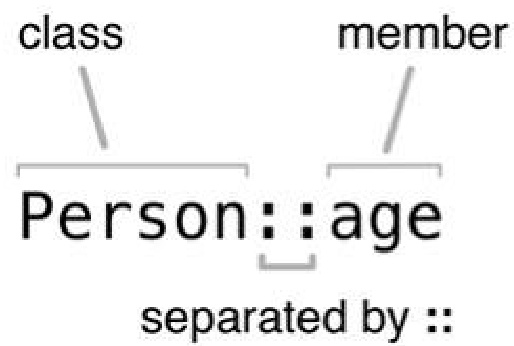
Four things
The constructor case
A function value that makes objects. No lambda written at all.
Bound references
When to use one
When the lambda would only forward.
When it does anything else, the lambda is clearer —
and contorting it to fit produces something worse.
The collection API
filter

map

Both return new collections
That reads as a description of the result.
The equivalent loop reads as a procedure, and you have to run it in your head.
Predicates
Two details worth keeping
Prefer any to a negated all. The double negative is a reading hazard.
Use count, not filter(...).size. filter builds a whole collection to ask its size.
groupBy

What it replaces
A hand-written loop with a HashMap,
a lookup, a null check, and a list creation on every insertion.
flatMap
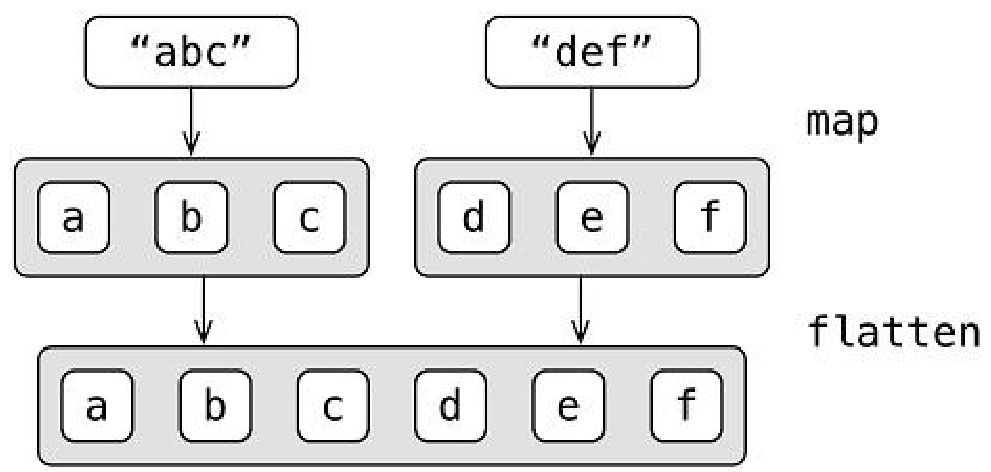
And flatten
Sequences
The problem
map builds a list. filter builds another.
A hundred elements: irrelevant. A million: two allocations and two traversals.
asSequence
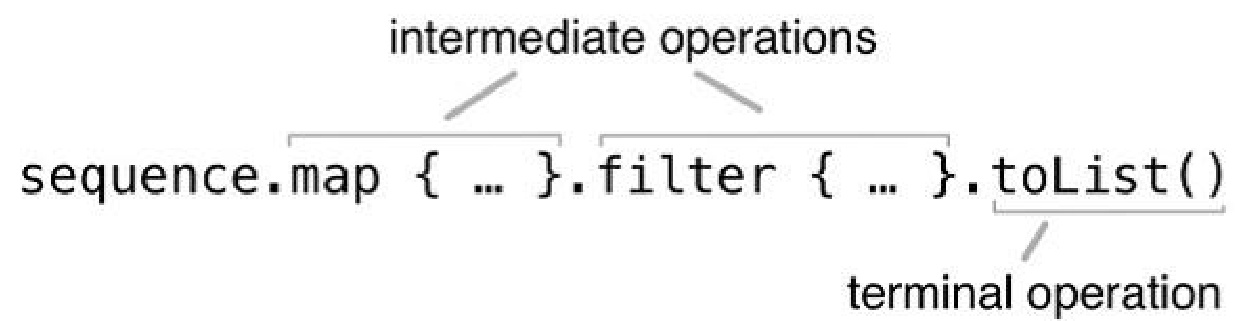
Intermediate versus terminal
Intermediate — returns a sequence, does nothing yet.
Terminal — produces a result, forces the chain.
Nothing happens
Prints nothing at all.
How elements flow
One at a time, all the way through
map(1) filter(1) map(2) filter(4) map(3) filter(9) ...Not map across everything, then filter across everything.
Two consequences
Order matters. filter before map maps fewer elements.
Eagerly, the total work is identical either way.
Short-circuiting is free. find stops as soon as it has an answer.
Creating them
Infinite sequences are safe, because nothing runs until asked.
When to use them
Large collections. Long chains. Chains that short-circuit.
For a list of ten, asSequence() is a pessimisation dressed as an optimisation.
Lambdas and Java interfaces
Java has no lambda type
Its lambdas are a compiler feature over functional interfaces.
So a Kotlin lambda must become an instance of one.
SAM conversion
Automatic. Which is what makes the Java ecosystem usable without wrappers.
The allocation detail
A lambda that captures nothing → one instance, reused.
A capturing lambda → a new object per call.
In a tight loop, that is an allocation per iteration.
SAM constructors
The compiler infers the target from a parameter type. Here there is none.
And one more use
To unregister a listener later,
you need a reference to the exact object you registered.
A caution
SAM conversion is for Java interfaces.
Kotlin has proper function types — next unit.
Declaring a single-method interface in Kotlin to accept a lambda is Java in disguise.
Lambdas with receivers
The idea
An ordinary lambda has parameters.
A lambda with a receiver additionally has a receiver object,
which becomes this inside the body.
Exactly like an extension function
Unit 3: a function got a receiver.
Here: a lambda does.
with
apply
applyreturns the receiver.withreturns the lambda’s result.
Which is why apply configures
Create, configure, use. No intermediate variable, no repeated name.
These are ordinary functions
No compiler support. Nothing special.
They work because a function can declare a parameter of extension function type.
Any function you write can do the same.
Now recall unit 1
Each block is a lambda with a receiver, and the receiver is the enclosing element.
Which is why td is available inside tr and not outside it.
Summary
The six things to carry away
- Idiomatic lambda syntax is four mechanical steps from the full form.
- Kotlin lambdas may modify captured locals — convenient, and a lifetime you may not want.
- The collection API returns a new collection at every step.
- Laziness changes the order work happens in, not only how much.
- SAM conversion is what makes the Java ecosystem usable without wrappers.
- A lambda with a receiver is the module’s destination, arriving early.
Where next
The Kotlin Type System turns to the safety claim.
Nullability, primitives and boxing, Any/Unit/Nothing.
And the read-only versus mutable collection split — which this unit quietly relied on.
Kotlin · Programming with Lambdas