Classes, Objects, and Interfaces
Kotlin
2026-08-21 09:00
Where we are
From calling to declaring
The previous unit was about the calling side.
This one is about declaring the types you call things on.
Same capabilities as Java, less ceremony, plus a few things Java cannot do.
Two defaults are reversed
Classes and methods are final unless marked open.
Nested classes hold no outer reference unless marked inner.
Kotlin picks the safer option, and makes you ask for the risk.
What you will be able to do
- Declare interfaces with default implementations.
- Explain why classes are final by default.
- Use the visibility modifiers, including
internal. - Distinguish nested from inner classes.
- Use sealed classes for exhaustive
when. - Write primary and secondary constructors.
- Implement interface properties and use
field. - Use data classes and
bydelegation. - Use object declarations and expressions.
- Use companion objects instead of
static.
Interfaces
Bodies with no keyword
One colon covers extends and implements.
override is mandatory
Where Java’s @Override is optional.
Not pedantry: it prevents accidental override.
You add a method, unknowingly override an inherited one you had forgotten. Java compiles that silently.
The diamond problem
The compiler refuses to guess.
Any arbitrary tie-break would silently pick behaviour you did not intend.
Final by default
Java’s default
Every class is open to inheritance unless marked final.
Kotlin reverses it.
open, and again per member
Which is which
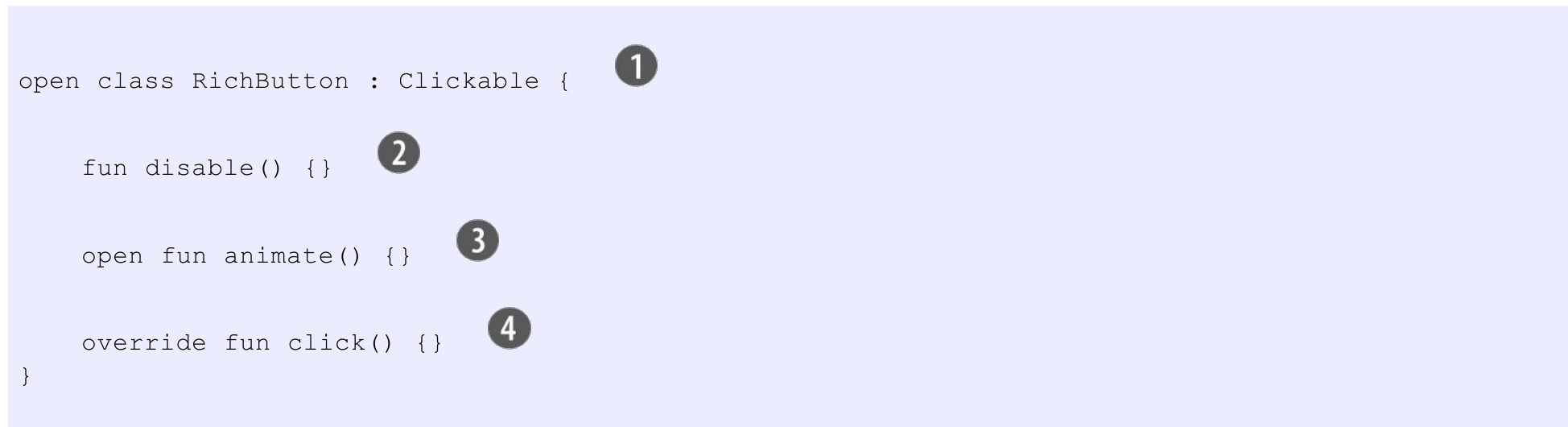
The fragile base class problem
A subclass overrides methods in ways the base author never anticipated,
relying on how the base calls its own methods.
A later, entirely reasonable change to the base breaks the subclass.
The classic example
A HashSet subclass counting additions.
Overrides add and addAll. Double-counts.
Because addAll happens to call add. Nothing in the contract said so.
Effective Java’s advice, enforced
Design and document for inheritance, or else prohibit it.
Making final the default means you must decide —
which is exactly the moment you would also document how.
Visibility
Four modifiers
| member | top-level | |
|---|---|---|
public (default) |
everywhere | everywhere |
internal |
the module | the module |
protected |
subclasses | — |
private |
the class | the file |
Three differences from Java
public is the default. If you did not restrict it, you did not intend to.
No package-private. internal replaces it — and Java’s could be defeated by declaring the same package name from another jar.
protected means subclasses only. Not the same package.
Nested and inner classes
The second reversal
Kotlin makes you ask
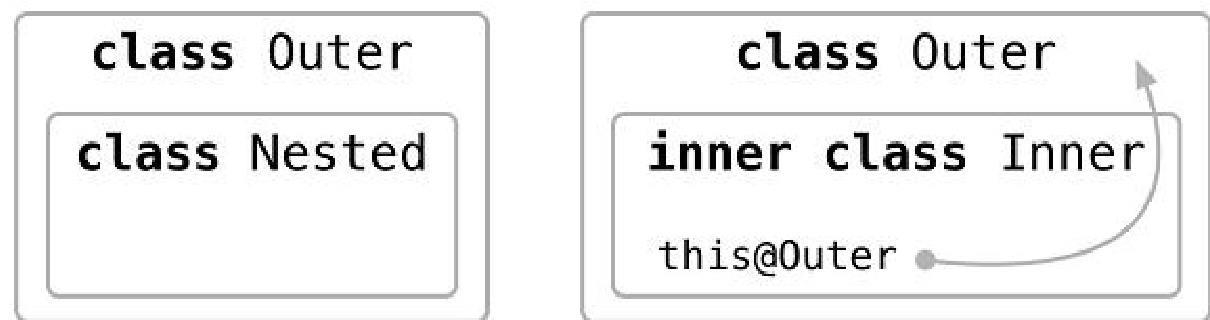
Why the reversal matters
Serialization fails — and names the outer class, not where you were looking.
Memory leaks — the outer object stays alive as long as the nested one does.
Classic in long-lived callbacks and listeners.
Sealed classes
The problem, from unit 2
Anyone can implement Expr, so the compiler demands an else.
And that else hides a bug
Add a Mul class.
Forget to handle it.
It falls silently into else and throws at runtime, in production.
sealed
The hierarchy is closed

Two things follow
A when covering all of them needs no else.
Adding a subclass makes every such when fail to compile.
The compiler becomes a checklist of what must be updated.
Constructors
The header does the work
val or var on a parameter declares a property.
init blocks
The primary constructor has no body of its own.
Superclass, in the header
A superclass has parentheses. An interface does not.
You construct one and merely implement the other.
Secondary constructors
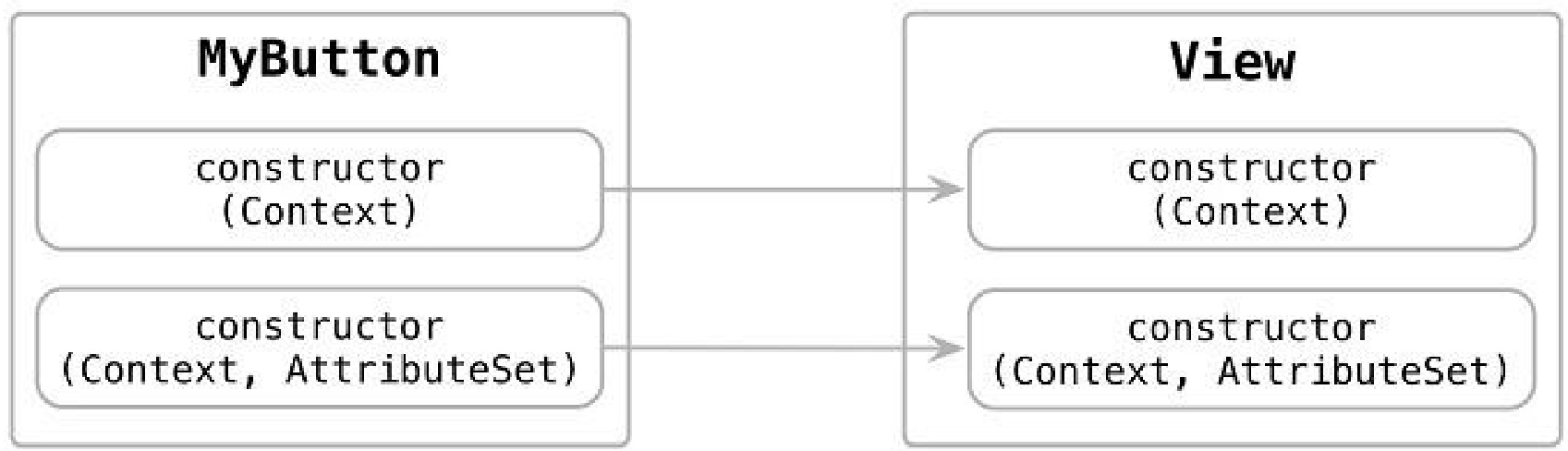
Delegating with this(…)
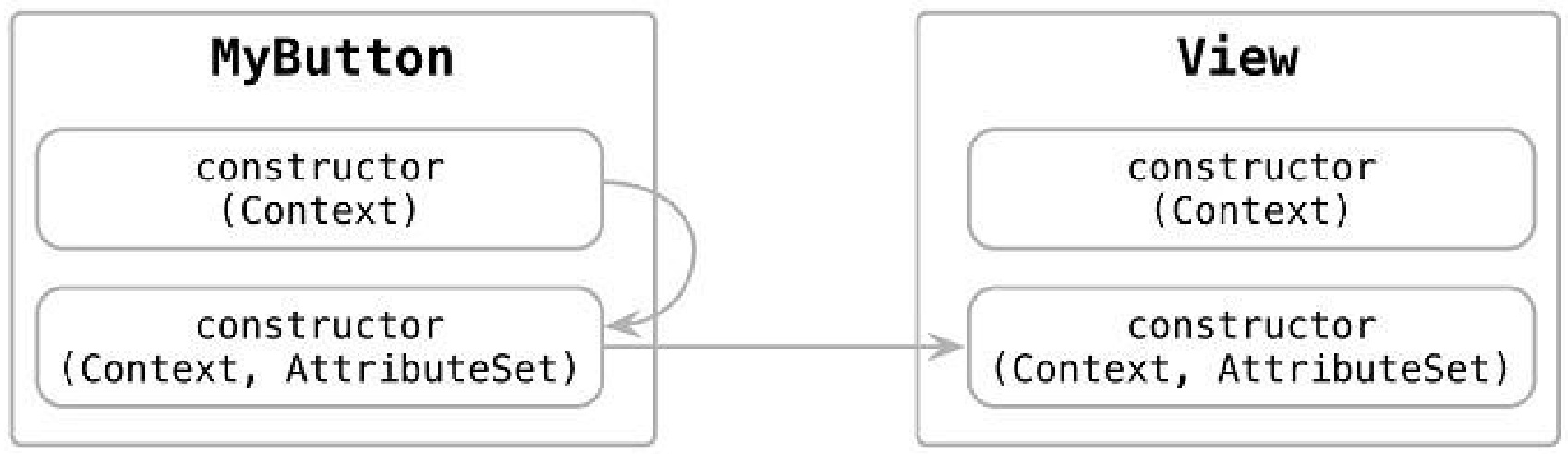
But prefer defaults
Most Java overload families collapse into
one primary constructor with default values.
Reach for secondary constructors mainly at a Java boundary.
Properties and backing fields
Interfaces specify what, not how
interface User { val nickname: String }

class PrivateUser(override val nickname: String) : User          // stored
class SubscribingUser(val email: String) : User {
    override val nickname get() = email.substringBefore('@')     // computed
}
class FacebookUser(val id: Int) : User {
    override val nickname = getFacebookName(id)                  // once
}
The interface cannot tell, and does not need to.
The field identifier
The only way to reach the backing field. There is no other name for it.
When does a field exist?
Only if an accessor references
field, or uses the default.
A computed property stores nothing.
Which is why an extension property must always be computed — nowhere to put one.
Accessor visibility
Public getter, private setter. Replaces five lines of Java pattern.
Data classes
The bug this prevents
Override equals, forget hashCode.
The object vanishes inside a HashSet.
Works perfectly until someone uses it as a map key.
One keyword
equals · hashCode · toString · copy · componentN
And equals and hashCode are consistent by construction.
Why copy matters
Data classes want val properties — immutable instances.
Change then means a new object.
Class delegation
The Java decorator
To modify one method of an interface,
implement the whole interface and forward everything else by hand.
by
Notice what this also fixes
Overriding both add and addAll here is not redundant.
CountingSet does not rely on addAll calling add — it delegates.
The fragile base class problem, avoided by composition. One keyword.
The object keyword
Three jobs, one idea
Declare a class and create an instance in a single step.
object declaration · companion object · object expression
Singletons
Everything a class can have, except a constructor.
The caution
A singleton with mutable state is a global variable wearing a hat.
Interfering tests, ordering dependencies, no substitution.
Stateless singletons are fine. Stateful ones deserve a hard look.
There is no static
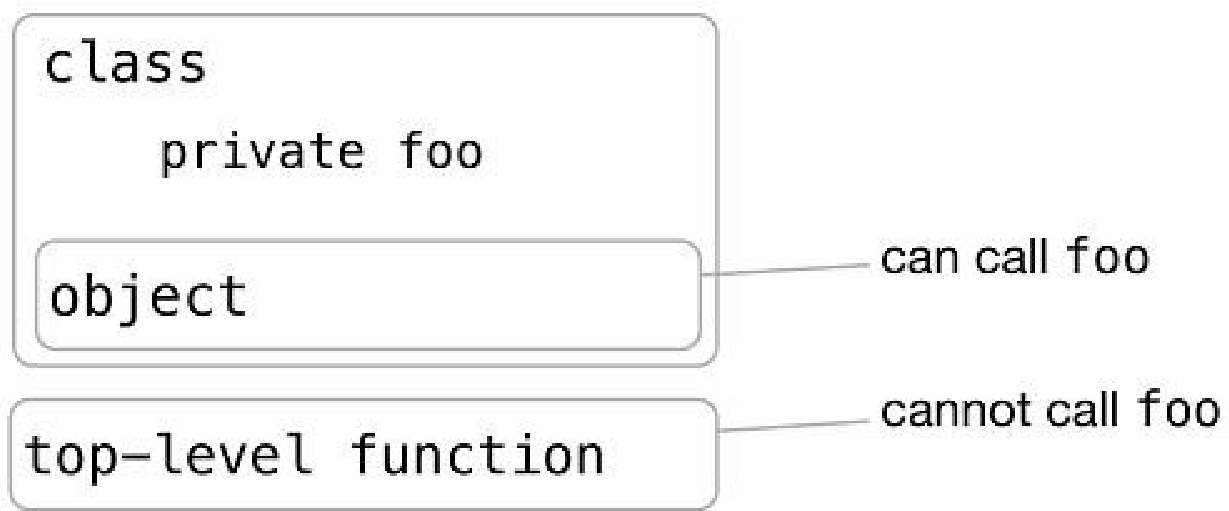
Companion objects
It can reach the class’s private members — including a private constructor.
Three things static cannot do
- be given a name
- implement an interface, so the class can be passed as one
- be extended with extension functions
That last one: a persistence layer can add Person.Companion.fromJSON
without Person knowing anything about persistence.
Object expressions
May implement several interfaces. May modify enclosing locals.
New instance each time — it is an expression, not a declaration.
But for one method
Use a lambda.
Which is the next unit.
Summary
The six things to carry away
- Kotlin reverses Java’s risky defaults and makes you ask for the risk.
- The fragile base class problem is the argument for final-by-default.
- Sealed classes turn a future runtime bug into a compile error today.
dataandbygenerate the code you would otherwise write badly.objectdoes three jobs; the companion is the interesting one.- Interfaces specify what, not how.
Where next
Programming with Lambdas begins the functional half.
Lambda syntax, the collection APIs, lazy sequences, Java interop.
And lambdas with receivers — the feature the final DSL unit depends on entirely.
Kotlin · Classes, Objects, and Interfaces